Once an agency is running n8n for more than one client, the question stops being “how do I run n8n” and becomes “how do I run n8n for a dozen clients without it becoming a full-time infrastructure job.” There are three common answers, and they trade off very differently.
Model 1: one shared instance for everyone
The tempting shortcut: a single n8n instance, with each client’s workflows living side by side inside it. It’s the cheapest option on paper and the fastest to set up.
It’s also the model with the worst failure mode. One instance means one database, one encryption key, and one incident radius — a problem with any client’s workflow, or any security issue on the instance itself, is a problem for every client simultaneously. It also makes “where does our data live?” an uncomfortable question to answer honestly, since the answer is “next to everyone else’s.”
Model 2: a separate VPS per client
The other extreme: stand up an individual VPS for each client. This genuinely solves isolation — separate instance, separate database, separate everything. What it doesn’t solve is the operational math: provisioning, patching, backing up, and monitoring n servers instead of one means the maintenance burden scales linearly with client count. For an agency with a handful of clients this is manageable. Past that, it becomes a second job, and consistency (did every client’s backup job actually run last night?) becomes genuinely hard to verify by hand.
Model 3: per-client isolated instances under one managed umbrella
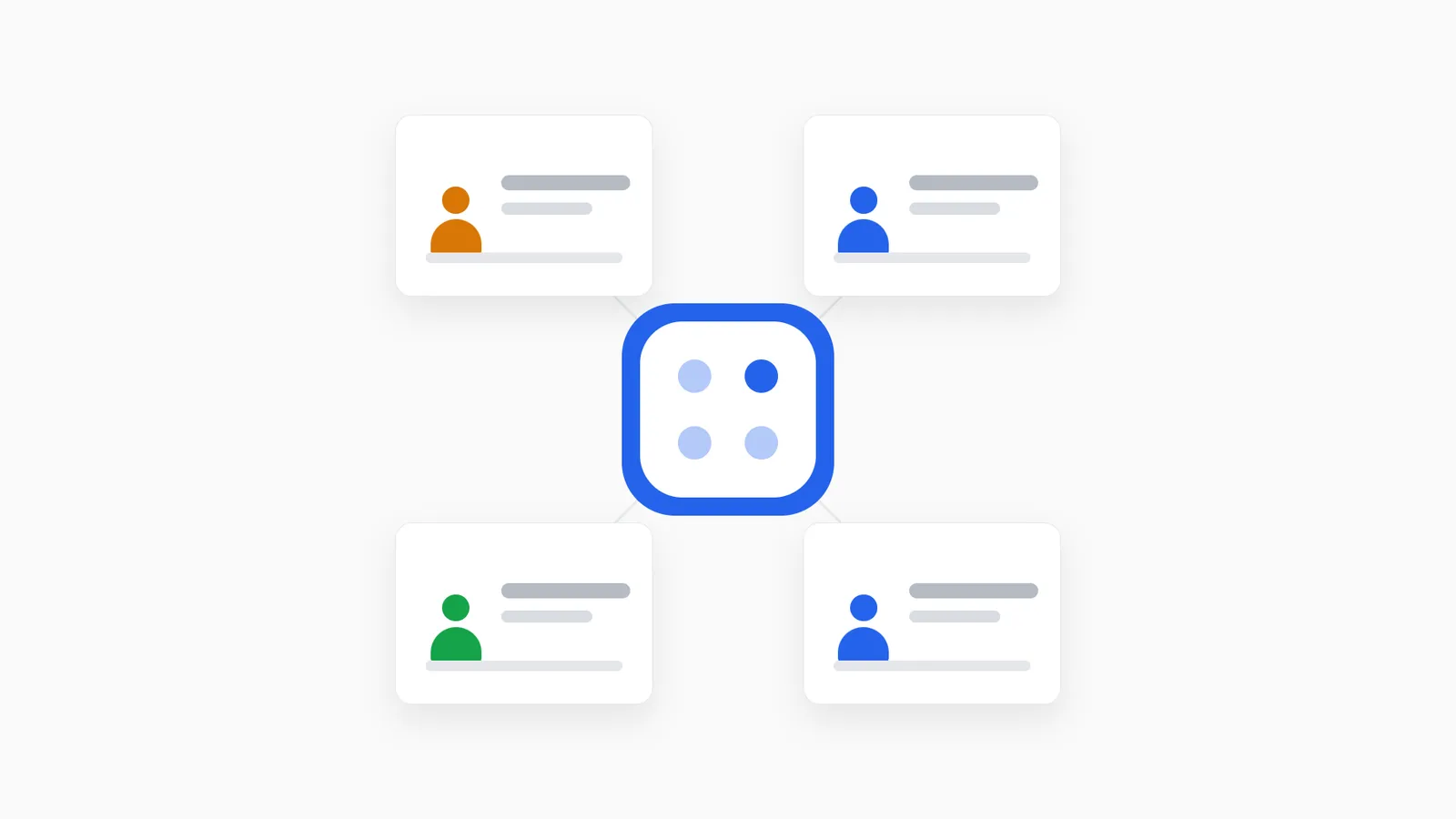
The pattern that scales without either failure mode: each client gets a genuinely separate, single-tenant instance — its own database, its own encryption key, its own resource limits, its own domain — but provisioning, patching support, backups, and monitoring are handled centrally rather than per-instance by hand. A multi-instance dashboard gives one view across every client’s health and backup status, so “did everything actually run” is a glance, not an audit.
Billing models agencies actually use
- Pass-through, per-instance pricing — bill each client for their own instance cost plus a management fee, transparent and easy to justify.
- Bundled into a retainer — infrastructure cost absorbed into a broader monthly service fee, simpler for the client, requires the agency to model its own margin carefully.
- Tiered by resource — larger or heavier clients (more executions, AI agent workflows) on a bigger instance size, billed accordingly, rather than one flat price regardless of actual load.
Support models worth comparing
Whoever owns the infrastructure layer needs a real response-time commitment, not “we’ll get to it.” The distinction worth being explicit about with clients: infrastructure support (the server, backups, uptime) is a different promise than workflow support (debugging a client’s specific automation logic) — conflating the two is where agencies end up over-promising. See how infra support and SLA targets actually scale by plan for a concrete example of separating those two commitments.
The honest recommendation
If you’re past two or three clients, Model 1’s shared-risk problem catches up with you faster than you’d expect — usually the first time one client’s misconfigured workflow affects another’s. Model 3 is what most agencies converge on once they’ve felt that: real isolation, without turning infrastructure management into the agency’s actual product. That’s also the architecture behind what to look for in white-label n8n hosting, if branding each client’s instance as your own is part of the picture too.